5 Best Image Optimization Plugins for WordPress in 2025 (Tested on Real Images)
Looking for the best image optimization plugin for WordPress? To help you choose, we went hands-on with five popular options and ran our own tests. See the results of these tests here.
What’s the Best Cache Plugin for WordPress? 5 Options Compared for 2025
Your site is slow. People leave. Google shrugs. You tweak your theme, compress your images, scream into the void. Still slow… The problem might be your cache plugin, or rather the cache plugin you’re not using yet.
Neve WordPress Theme Review: 1,200+ Five-Star Ratings Can’t Be Wrong…or Can They?
Neve has long been considered one of the top ten WordPress themes in the official WordPress repository. It consistently gets high ratings and is active on hundreds of thousands of websites. It’s obvious that many people like it, but does that mean it’s a good choice for you? In this review we peel back the curtain and give you all the information you need to make that decision.
The FAIR Package Manager Just Launched as a WordPress Repository Alternative – but What Exactly Is It?
A few days ago, the annual WordCamp Europe meetup took place in the picturesque city of Basel, Switzerland. The biggest announcement from the event was the new FAIR Package Manager – but what exactly is it? In this article we dive into the details, including Matt Mullenweg’s reaction when asked about it on stage.
I Tried Hostinger’s New Horizons AI Developer Tool: Is the Hype Justified?
Hostinger Horizons is marketed as an easy way for non-developers without a technical background to build their own apps, but it can also be used to build websites. I decided to try both and in this post I will share the results with you. I’ll also provide my overall thoughts on Hostinger Horizons’s strengths, limitations, and usefulness.
Lunchtime Blues : Lost European
Lost European, their style of music is “art rock”…alternative, progressive, intricate and orchestrated with precision crafted songs that are catchy and meaningful. Created by the rocket scientists who designed the Stealth Bomber, the F-18 Hornet and the Apache Helicopter, this apocolyptic CD is dark and moody, yet highly polished alternative rock filled with catchy melodies and powerful music.
Lost European is a sophisticated band with a Euro-British sound. The songwriting is all original. The founding band members are degreed aerospace engineers from Britain and the U.S. Not only have they designed some of the most extraordinary high tech fighters and spacecraft of the world, they have also formed a high tech band of skilled musicians, composers, and computer programmers.
The Four Seasons (Vivaldi)
The Four Seasons (Italian: Le quattro stagioni) is a group of four violin concerti by Italian composer Antonio Vivaldi, each of which gives musical expression to a season of the year. These were composed around 1718–1720, when Vivaldi was the court chapel master in Mantua.
They were published in 1725 in Amsterdam, together with eight additional concerti, as Il cimento dell’armonia e dell’inventione (The Contest Between Harmony and Invention).
The Four Seasons is the best known of Vivaldi’s works. Though three of the concerti are wholly original, the first, “Spring”, borrows patterns from a sinfonia in the first act of Vivaldi’s contemporaneous opera Il Giustino. The inspiration for the concertos is not the countryside around Mantua, as initially supposed, where Vivaldi was living at the time, since according to Karl Heller they could have been written as early as 1716–1717, while Vivaldi was engaged with the court of Mantua only in 1718.
They were a revolution in musical conception: Vivaldi represented flowing creeks, singing birds (of different species, each specifically characterized), a shepherd and his barking dog, buzzing flies, storms, drunken dancers, hunting parties from both the hunters’ and the prey’s point of view, frozen landscapes, and warm winter fires.
Unusually for the period, Vivaldi published the concerti with accompanying sonnets (possibly written by the composer himself) that elucidated what it was in the spirit of each season that his music was intended to evoke. The concerti therefore stand as one of the earliest and most detailed examples of what would come to be called program music—in other words, music with a narrative element. Vivaldi took great pains to relate his music to the texts of the poems, translating the poetic lines themselves directly into the music on the page. For example, in the middle section of “Spring”, when the goatherd sleeps, his barking dog can be heard in the viola section. The music is elsewhere similarly evocative of other natural sounds. Vivaldi divided each concerto into three movements (fast–slow–fast), and, likewise, each linked sonnet into three sections. (ref Wikipedia)
Relaxing Summer Chill
Jump Steady Blues
Jump Steady Blues
Clarence “Pinetop” Smith (June 11, 1904 – March 15, 1929), was an American boogie-woogie style blues pianist. His hit tune “Pine Top’s Boogie” featured rhythmic “breaks” that were an essential ingredient of ragtime music, but also a fundamental foreshadowing of rock and roll.[2] The song was also the first known use of the term “boogie woogie” on a record, and cemented that term as the moniker for the genre.

Smith was born in Troy, Alabama and raised in Birmingham, Alabama. He received his nickname as a child from his liking for climbing trees. In 1920 he moved to Pittsburgh, Pennsylvania, where he worked as an entertainer before touring on the Theatre Owners Booking Association (T.O.B.A.) vaudeville circuit, performing as a singer and comedian as well as a pianist. For a time, he worked as accompanist for blues singer Ma Rainey and Butterbeans and Susie.
In the mid-1920s, he was recommended by Cow Cow Davenport to J. Mayo Williams at Vocalion Records, and in 1928 he moved, with his wife and young son, to Chicago, Illinois to record. For a time he, Albert Ammons, and Meade Lux Lewis lived in the same rooming house.
On December 29, 1928, he recorded his influential “Pine Top’s Boogie Woogie”, one of the first “boogie woogie” style recordings to make a hit, and which cemented the name for the style. It was also the first recording to have the phrase ‘boogie woogie’ in the song’s title.[6] Smith talks over the recording, telling how to dance to the number.[2] He said he originated the number at a house-rent party in St. Louis, Missouri. Smith was the first ever to direct “the girl with the red dress on” to “not move a peg” until told to “shake that thing” and “mess around”. Similar lyrics are heard in many later songs, including “Mess Around” and “What’d I Say” by Ray Charles.
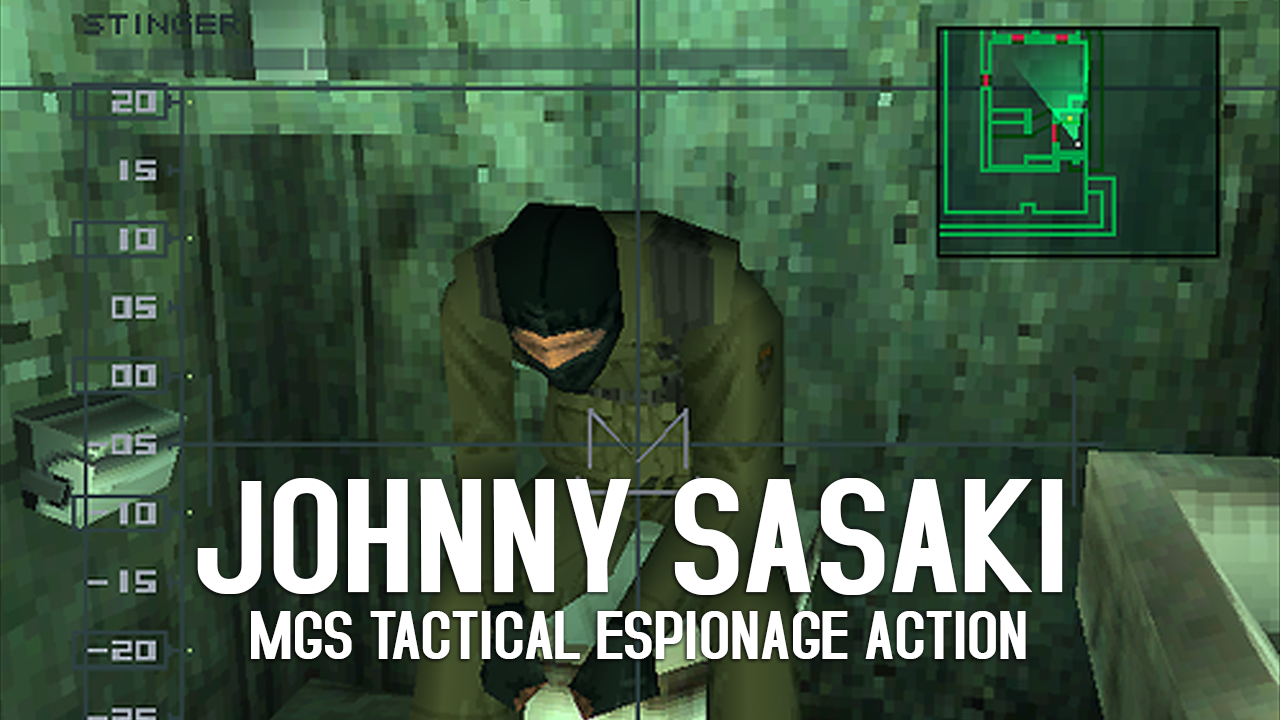
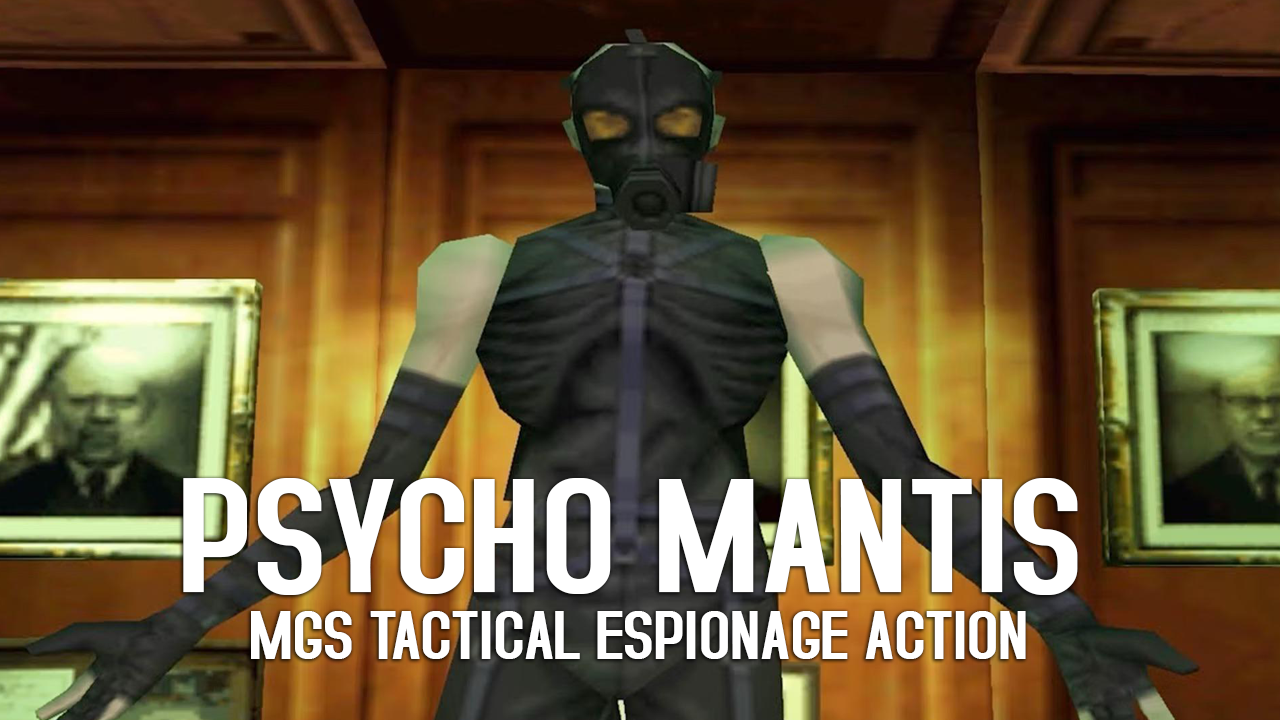
Metal Gear Solid Tactical Espionage Action 1998
Metal Gear Solid 1998
Metal Gear Solid is an action-adventure stealth video game developed and published by Konami for the PlayStation in 1998. It was directed, produced, and written by Hideo Kojima, and follows the MSX2 video games Metal Gear and Metal Gear 2: Solid Snake, which Kojima also worked on.
It was unveiled at the 1996 Tokyo Game Show and then demonstrated at trade shows including the 1997 Electronic Entertainment Expo; its Japanese release was originally planned for late 1997, before being delayed to 1998.
Players control Solid Snake, a soldier who infiltrates a nuclear weapons facility to neutralize the terrorist threat from FOXHOUND, a renegade special forces unit. Snake must liberate hostages and stop the terrorists from launching a nuclear strike.[10] Cinematic cutscenes were rendered using the in-game engine and graphics, and voice acting is used throughout.
Metal Gear Solid sold more than seven million copies worldwide and shipped 12 million demos. It scored an average of 94/100 on the aggregate website Metacritic. It is regarded as one of the greatest and most important video games of all time and helped popularize the stealth genre and in-engine cinematic cutscenes. It was followed by an expanded version for PlayStation and Windows, Metal Gear Solid: Integral (1999), and a GameCube remake, Metal Gear Solid: The Twin Snakes (2004). It produced numerous sequels, starting with Metal Gear Solid 2: Sons of Liberty (2001), and media adaptations including a radio drama, comics, and novels. In May 2023, Konami announced Metal Gear Solid: Master Collection Vol. 1, a compilation of games including the original version of Metal Gear Solid, which was released for Nintendo Switch, PlayStation 4, PlayStation 5, Windows, and Xbox Series X/S on October 24, 2023.
Super Metroid 1994
Super Metroid 1994
Super Metroid is a 1994 action-adventure game developed by Nintendo and Intelligent Systems and published by Nintendo for the Super Nintendo Entertainment System. It is the third installment in the Metroid series, following the events of the Game Boy game Metroid II: Return of Samus (1991).
Players control bounty hunter Samus Aran, who travels to planet Zebes to retrieve an infant Metroid creature stolen by the Space Pirate leader Ridley.
Following the established gameplay model of its predecessors, Super Metroid focuses on exploration, with the player searching for power-ups used to reach previously inaccessible areas. It introduced new concepts to the series, such as the inventory screen, an automap, and the ability to fire in all directions. The development staff from previous Metroid games—including Yoshio Sakamoto, Makoto Kano and Gunpei Yokoi—returned to develop Super Metroid over the course of two years. The developers wanted to make a true action game, and set the stage for Samus’s reappearance.
Super Metroid received acclaim, with praise for its atmosphere, gameplay, music and graphics. It is often cited as one of the greatest video games of all time. The game sold well and shipped 1.42 million copies worldwide by late 2003. Alongside Castlevania: Symphony of the Night, Super Metroid is credited for establishing the “Metroidvania” genre, inspiring numerous indie games and developers. It also became popular among players for speedrunning. Super Metroid was followed in 2002 by Metroid Fusion and Metroid Prime. It has been re-released on several Nintendo consoles and services.
Medal of Honor
Medal of Honor 1999
Medal of Honor is a 1999 first-person shooter video game, developed by DreamWorks Interactive and published by Electronic Arts for PlayStation. It is the first installment in the Medal of Honor video game series. The gameplay features the combined arms warfare of World War II, as the player completes various missions for the Office of Strategic Services.
Medal of Honor’s concept, production and story were created by American film director and producer Steven Spielberg, who had a deep interest in World War II and found further inspiration from watching his son play GoldenEye 007. While in development, the game experienced controversy due to the 1999 Columbine High School massacre, and was criticized by the Congressional Medal of Honor Society for turning a serious topic into a video game. Game producer Peter Hirschmann convinced Medal of Honor Society president Paul Bucha that the project was made with serious and honorable intentions, saving the project from cancellation, and earning Bucha’s endorsement.
Medal of Honor was released to universal acclaim, and has been credited with popularizing the trend of World War II shooters. The game was followed by Medal of Honor: Underground, leading to a widely successful series.
Legacy of Kain: Soul Reaver
Legacy of Kain: Soul Reaver is an action-adventure video game developed by Crystal Dynamics and published by Eidos Interactive. It was released for the PlayStation and Microsoft Windows in 1999 and for the Dreamcast in 2000.
As the second game in the Legacy of Kain series, Soul Reaver is the sequel to Blood Omen: Legacy of Kain. Soul Reaver was followed by three games, one of which, Soul Reaver 2, is a direct sequel.
Taking place 1500 years after the events of Blood Omen, Soul Reaver chronicles the journey of the vampire-turned-wraith Raziel, lieutenant to the vampire lord Kain. Raziel is killed by Kain, but is revived by The Elder God to become his “soul reaver” and to exact revenge. Raziel shares this title with Kain’s sword, the Soul Reaver, which he acquires during the game.
Crystal Dynamics began development of the game in 1997, but a deteriorating relationship with Silicon Knights, who had developed Blood Omen, created legal problems. This and other delays forced material originally planned for Soul Reaver to be instead released with later games of the series. Soul Reaver was generally well received by critics and praised for its intriguing gothic story and high-quality graphics. However, the game was criticized for simple and repetitive gameplay and an unsatisfying climax. By 2001, the game sold 1.5 million copies worldwide.
The Arctic Giant : 1942
The Arctic Giant is the fourth of seventeen animated Technicolor short films based upon the DC Comics character of Superman. This animated short was created by Fleischer Studios. The story runs nine minutes and covers Superman’s adventures in defeating a giant monster that terrorizes the city. The short depicts a Godzilla-esque scenario while predating the 1954 film by 12 years.
The story begins as the narrator tells about an Arctic Giant found frozen in perfect condition millions of years ago in Siberia. The dinosaur-like monster is shipped to the Museum of Natural Science in Metropolis, where it is identified as a Tyrannosaurus and is kept frozen using special refrigeration equipment. (ref. Wikipedia)
Release date February 27, 1942
Running time 9 minutes (one reel)
Production Company Fleischer Studios
Distributed by Paramount Pictures
Animation by Willard Bowsky & Reuben Grossman
Color Process: Technicolor
Starring Bud Collyer, Joan Alexander, Jackson Beck, Julian Noa
Directed by Dave Fleischer
Story by Bill Turner & Tedd Pierce
Based on Superman by Jerry Siegel & Joe Shuster
Produced by Max Fleischer
Music by Sammy Timberg
Night Latch Key Blues
Virginia Liston was one of the blues singers whose career was spent primarily in Black vaudeville. She is said to have gotten her start in show business around 1912 in Washington D.C. In 1920 she married entertainer Sam Gray and toured with him as part of a husband-and-wife team called Liston & Liston.
They divorced in 1925. In the early ’20s Liston came in contact with Clarence Williams, who recorded with her for Okeh for the first time in September, 1923. Thirty-six issued sides for Okeh and Vocalion came out under Virginia Liston’s name through the summer of 1926, the most famous being a pairing that united Liston with Clarence Williams’ Blue Five, then including Louis Armstrong and Sidney Bechet. Virginia Liston remarried and retired from show business in 1929, afterward settling in St. Louis to work in the church. Three years later she was dead. ~ Uncle Dave Lewis
Morgan Greig
Morgan Greig Playlist
Craig Morgan Greer (born July 17, 1964) is an American country music artist. A veteran of the United States Army as a forward observer and current member of the United States Army Reserve, Morgan began his musical career in 2000 on Atlantic Records, releasing his self-titled debut album for that label before the closure of its Nashville division in 2000.
In 2002, Morgan signed to the independent Broken Bow Records, on which he released three studio albums: 2003’s I Love It, 2005’s My Kind of Livin’, and 2006’s Little Bit of Life. These produced several chart hits, including “That’s What I Love About Sunday”, which spent four weeks at the top of the Billboard country charts while also holding the No.
1 position on that year’s Billboard Year-End chart for the country format. A greatest hits package followed in mid-2008 before Morgan signed to BNA Records and released That’s Why later that same year. After exiting BNA, Morgan signed with Black River Entertainment and released This Ole Boy in 2012, followed by A Whole Lot More to Me in 2016. (ref Wikipedia)
Reefer Madness 1938
Reefer Madness 1938
Reefer Madness (originally made as Tell Your Children and sometimes titled The Burning Question, Dope Addict, Doped Youth, and Love Madness) is a 1936 American exploitation film about drugs, revolving around the melodramatic events that ensue when high school students are lured by pushers to try marijuana
Upon trying it, they become addicted, eventually leading them to become involved in various crimes such as a hit and run accident, manslaughter, murder, conspiracy to murder and attempted rape. While all this is happening, they suffer hallucinations, descend into insanity, associate with organized crime and (in one character’s case) commit suicide. The film was directed by Louis J. Gasnier and featured a cast of mainly little-known actors.
Originally financed by a church group under the title Tell Your Children, the film was intended to be shown to parents as a morality tale attempting to teach them about the dangers of cannabis use.Soon after the film was shot, it was purchased by producer Dwain Esper, who re-cut the film for distribution on the exploitation film circuit, exploiting vulgar interest while escaping censorship under the guise of moral guidance, beginning in 1938–1939 through the 1940s and 1950s.
The film was “rediscovered” in the early 1970s and gained new life as an unintentional satire among advocates of cannabis policy reform. Critics have called it one of the worst films ever made and has gained a cult following within cannabis culture. Today, it is in the public domain in the United States.

Directed by Louis J. Gasnier
Screenplay by Arthur Hoerl
Story by Lawrence Meade
Produced by George Hirliman & Dwain Esper
Duration: 1 hour, 8 minutes and 17 seconds
Starring
Dorothy Short
Kenneth Craig
Lillian Miles
Dave O’Brien
Thelma White
Warren McCollum
Carleton Young
Cinematography Jack Greenhalgh
Edited by Carl Pierson
Music by Abe Meyer
Production Company G&H Productions
Distributed by Motion Picture Ventures
Release dates 1936
Running time 68 minutes
Country United States
Language English
“If you want a good smoke, try one of these.”
In 1936 or 1938, Tell Your Children was financed and made by a church group and intended to be shown to parents as a morality tale attempting to teach them about the dangers of cannabis use. It was originally produced by George Hirliman; however, some time after the film was made, it was purchased by exploitation filmmaker Dwain Esper, who inserted salacious shots. In 1938 or 1939, Esper began distributing it on the exploitation circuit where it was originally released in at least four territories, each with their own title for the film: the first territory to screen it was the South, where it went by Tell Your Children (1938 or 1939).


West of Denver, Colorado, the film was generally known as Doped Youth (1940). In New England, it was known as Reefer Madness (1940 or 1947), while in the Pennsylvania/West Virginia territory it was called The Burning Question (1940). The film was then screened all over the country during the 1940s under these various titles and Albert Dezel of Detroit eventually bought all rights in 1951 for use in roadshow screenings throughout the 1950s.
Such education-exploitation films were common in the years following adoption of the stricter version of the Production Code in 1934. Other films included Esper’s own earlier Marihuana (1936) and Elmer Clifton’s Assassin of Youth (1937) and the subject of cannabis was particularly popular in the hysteria surrounding Anslinger’s 1937 Marihuana Tax Act, a year after Reefer Madness. (ref. Wikipedia)
Carnival of Souls 1962
Mary Henry (Hilligoss) is riding in a car with two other young women when some men challenge them to a drag race. As they speed across a bridge, the women’s car plunges over the side into the river. The police spend three hours dragging the murky, fast-running water without success. Mary miraculously surfaces, but she cannot remember how she survived.
Mary then drives to Utah, where she has been hired as a church organist. At one point, she can get nothing on her car radio but strange organ music. She passes a large, abandoned pavilion sitting all by itself on the shores of the Great Salt Lake; it seems to beckon to her in the twilight. Shortly thereafter, while she is speeding along a deserted stretch of road, a ghoulish, pasty-faced figure (billed as “The Man”, played by director Herk Harvey) replaces her lection in the passenger window and stares at her. When The Man suddenly appears in front of her, she swerves off the road. At a gas station, the attendant tells her the pavilion was first a bathhouse, then a dance hall, and finally a carnival before shutting down.
In town, Mary rents a room from Mrs. Thomas; John Linden, the only other lodger, wants to become better acquainted with the blonde newcomer, but she is not interested. That night, she becomes upset when she sees The Man downstairs in the large house and retreats to her room. Mrs. Thomas, who brings her some food, says she did not pass anyone.
Soon, Mary begins experiencing terrifying interludes when she becomes invisible and inaudible to the rest of the world, as if she simply is not there. When The Man appears briefly in front of her in a park, she flees, right into the arms of a Dr. Samuels. He tries to help her, even as he acknowledges he is not a psychiatrist.
Her new employer, the minister (Art Ellison), is put off when she declines his suggestion of a reception to meet the congregation. When she practices for the first time, she finds herself shifting from a hymn to eerie music. In a trance, she sees The Man and others of his ilk dancing. The minister, hearing the strange music, denounces it as “profane” and insists upon her resignation.
Terrified of being alone, Mary agrees to go out on a date with Linden. When they return home, he smooth-talks his way into her room, but when she sees The Man in the mirror, she becomes upset and tries to tell Linden what has been happening to her. He leaves, believing she is losing her mind.
After talking with Samuels again, Mary believes she has to go to the pavilion. There, however, she finds no answers.
Other ghouls join The Man. Mary tries frantically to escape, at one point boarding a bus to leave town, only to find that all the passengers are ghouls. Then she wakes up, showing that she dreamed this sequence at least. In the end, she is drawn back to the pavilion, where she finds her tormenters dancing. A pale version of herself is paired with The Man. When she runs away, they chase her out onto the beach. She collapses, and they close in.
The minister, the doctor and the police are baffled. Her bare footprints in the sand (the only ones) end abruptly, but there is no trace of her.
In the final scene, the car is finally located and pulled from the river. Mary’s body is in the front seat alongside those of the other two girls.
Attack of the Giant Leeches
In the Florida Everglades, a pair of larger-than-human, intelligent Leech are living in an underwater cave. They begin dragging local people down to their cave where they hold them prisoner and slowly drain them of blood.
One of the first people to be so taken is the local vixen, Liz Walker, played by Yvette Vickers. After a couple of gratuitous displays of flesh (Vickers appeared as the centerfold in the July 1959 issue of Playboy), and some running around on her husband (Bruno VeSota), Liz finds herself a prisoner of the leeches along with her current paramour. Game warden Steve Benton (Ken Clark (actor)) sets out to investigate their disappearance. Aided by his girlfriend Nan Grayson (Jan Sheppard) and her father, Doc Grayson, he discovers the cavern.