
Causes, Effects, and Solutions
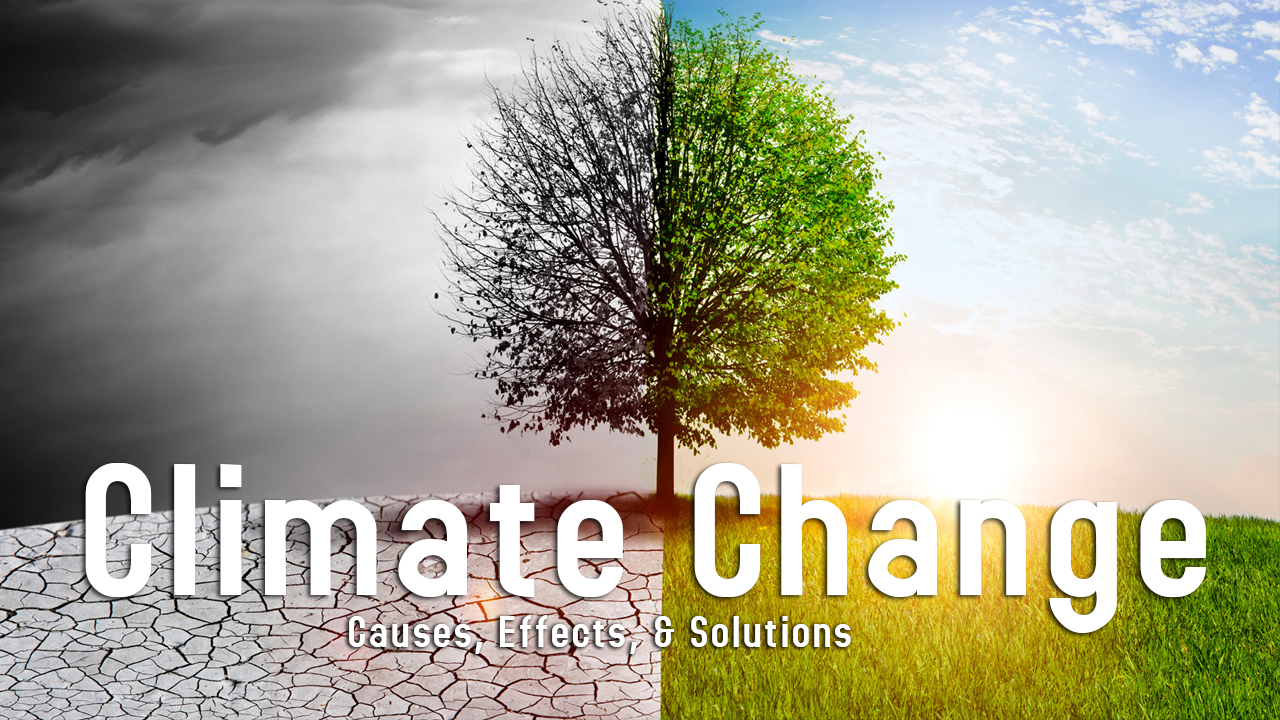
Climate change refers to the long-term alteration of Earth’s temperatures and weather patterns, primarily driven by human activities. While natural factors such as volcanic eruptions and variations in solar radiation have historically influenced climate, the 20th century marked a pivotal shift due to anthropogenic (human-caused) factors. The burning of fossil fuels, deforestation, and industrial processes have significantly increased greenhouse gas (GHG) concentrations in the atmosphere, trapping heat and leading to global warming. This phenomenon is evident in rising global temperatures, which have averaged approximately 1.1°C since the pre-industrial era, with projections indicating a rise of 1.5°C or more by the 2030s.
The primary driver of climate change is the emission of carbon dioxide (CO₂), a byproduct of fossil fuel combustion, and methane, released during agriculture and livestock operations. Deforestation, which removes vast carbon sinks, exacerbates the problem by reducing the planet’s ability to absorb CO₂. Industrial processes, such as cement production and iron smelting, also release significant amounts of GHGs. These activities have disrupted atmospheric balance, leading to extreme weather events, rising sea levels, and shifting ecosystems. For instance, the Arctic is experiencing accelerated ice melt, with sea ice covering 30% less area than in the 1980s. Similarly, heatwaves, hurricanes, and wildfires are becoming more frequent and intense, threatening global food and water security.
The ecological consequences of climate change are profound. Species are struggling to adapt to rapidly changing climates, leading to biodiversity loss. Coral reefs, which support 25% of marine life, are dying due to ocean acidification and warming waters. Wetlands, critical carbon sinks, are being drained for agriculture and urbanization, further destabilizing ecosystems. Human health is also at risk, as rising temperatures expand the habitats of disease-carrying vectors like mosquitoes, increasing the spread of malaria and dengue. In addition, food and water insecurity worsens as agricultural zones shift, threatening food supplies and freshwater availability.
Mitigating climate change requires global cooperation and systemic reforms. Transitioning to renewable energy sources, such as solar and wind, reduces reliance on fossil fuels. Governments must enforce carbon pricing, incentivizing industries to adopt cleaner technologies. Sustainable practices, like reforestation and circular economies, can enhance carbon sequestration. Individual actions, such as reducing waste, conserving energy, and supporting eco-friendly policies, also play vital roles. International agreements, like the Paris Accord, aim to limit global warming to 1.5°C, but achieving this requires consistent political will and equitable resource distribution. Education and awareness are critical to fostering behavioral change and ensuring that vulnerable populations—especially low-income and indigenous communities—are not disproportionately affected.
In conclusion, climate change is a complex, multifaceted crisis demanding urgent and coordinated action. Addressing its root causes and implementing scalable solutions are essential to preserving ecological stability and human livelihoods. While the challenges are daunting, technological innovation, policy reforms, and collective efforts offer pathways to a sustainable future. The time to act is now, and every individual’s participation—from reducing carbon footprints to advocating for environmental justice—can contribute to a healthier planet.