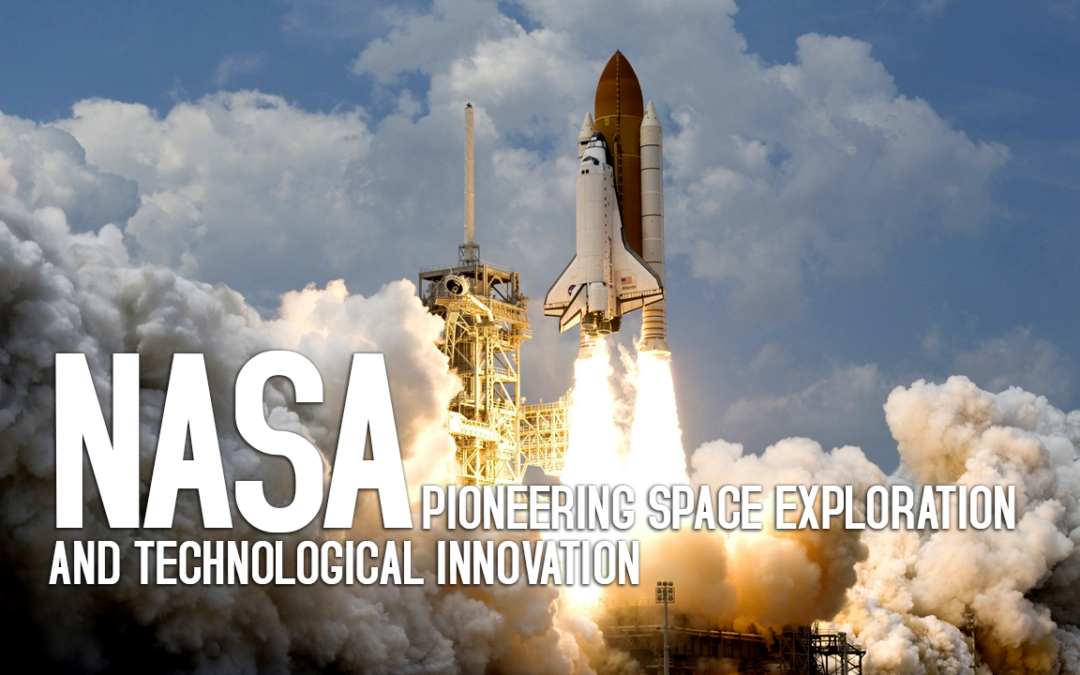
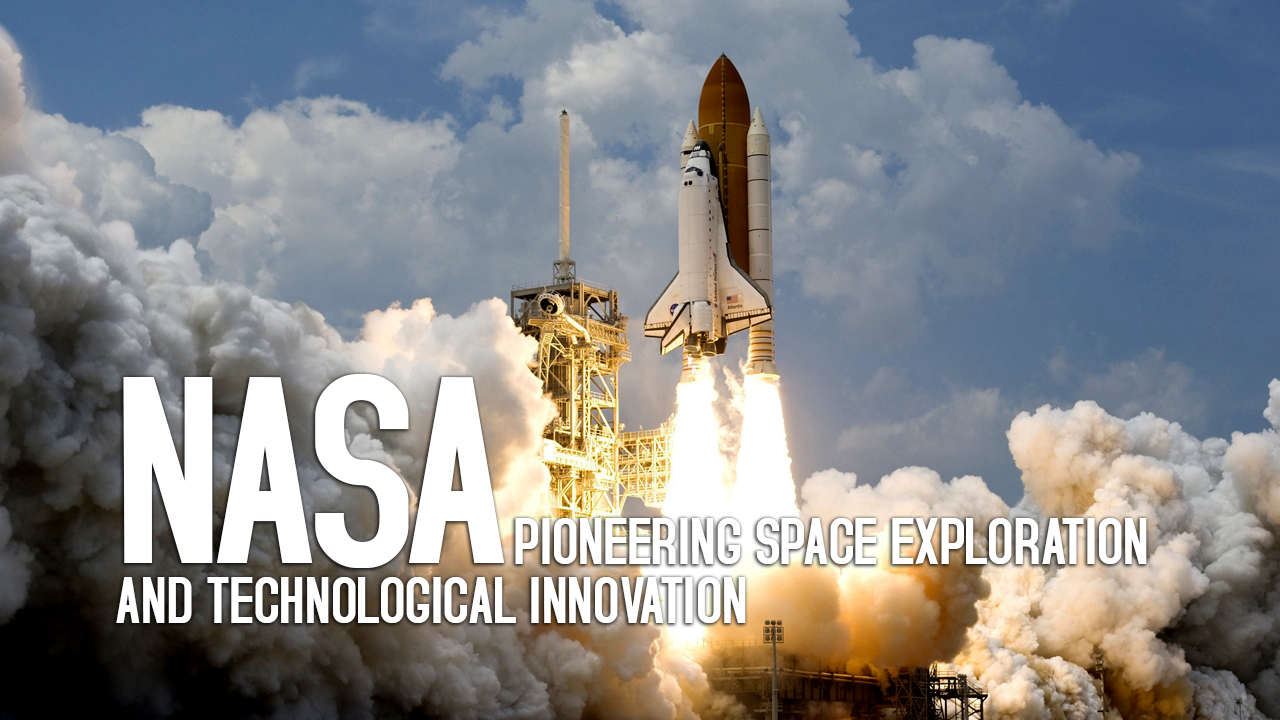
Pioneering Space Exploration and Technological Innovation
The National Aeronautics and Space Administration (NASA), established in 1958, stands as a monumental institution in the history of human space exploration. Originating during the Cold War era as a response to the Soviet Union’s advancements in rocketry, NASA’s primary mission was to explore space and ensure American technological leadership. Its creation marked a pivotal moment in humanity’s journey toward the cosmos, with the Apollo program’s first moon landing in 1969 symbolizing its unparalleled success. Today, NASA continues to push the boundaries of science and engineering, addressing challenges from climate change to interplanetary travel.
NASA’s legacy is rooted in its pivotal role in the space race. The Mercury and Gemini programs laid the groundwork for human spaceflight, while the Apollo missions achieved the extraordinary feat of landing astronauts on the Moon. These achievements not only demonstrated the feasibility of interplanetary travel but also inspired generations of scientists and engineers. Post-Apollo, NASA shifted focus to sustainable space exploration, culminating in the International Space Station (ISS) program, which became a collaborative effort between multiple nations. The ISS remains a testament to international cooperation and the potential of space research to advance human knowledge.
Technological innovation is another cornerstone of NASA’s mission. From the invention of the hydrogen-filled rocket to the development of the space shuttle, NASA has continually pioneered cutting-edge technologies. Its contributions to fields such as satellite technology, radar, and computer science are foundational to modern life. More recently, NASA’s Mars rover missions, like Perseverance, have revealed vital insights into planetary geology and potential past life. The James Webb Space Telescope, launched in 2021, has revolutionized our understanding of the early universe and galaxy formation. These innovations highlight NASA’s dual role as both a scientific laboratory and a driver of technological progress.
Beyond exploration, NASA plays a critical role in addressing global challenges. Climate change research conducted aboard the ISS and through satellite data helps monitor environmental shifts, while asteroid defense initiatives, such as the DART mission, aim to protect Earth from potential impacts. Additionally, NASA’s partnerships with private industries, like SpaceX and Blue Origin, foster economic growth and sustainable space travel. The agency’s focus on space-based solutions, from renewable energy to space medicine, underscores its commitment to using science for the betterment of humanity.
NASA’s impact spans centuries, from pioneering the space race to shaping the future of space exploration. Its legacy is etched in milestones like the Moon landing and the ISS, while its modern endeavors reflect a forward-thinking approach to scientific discovery and technological advancement. As humanity looks to the stars, NASA remains a beacon of innovation, inspiring nations and individuals alike to dream beyond Earth. Through its unwavering dedication to exploration and stewardship, NASA ensures that the spirit of curiosity and progress continues to drive human progress for generations to come.
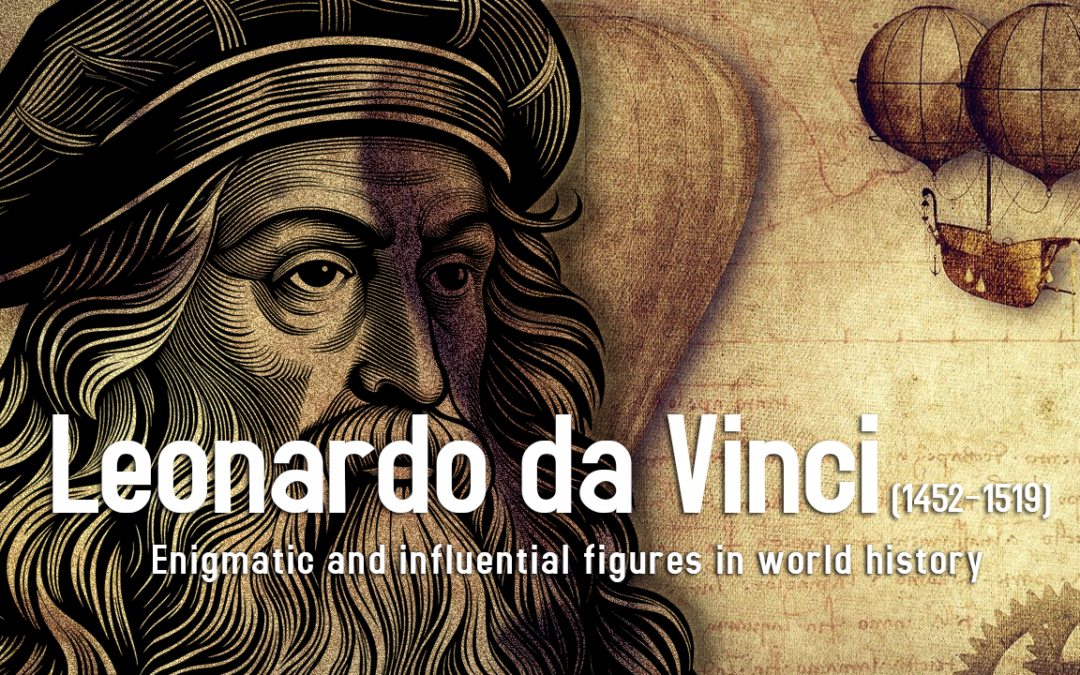
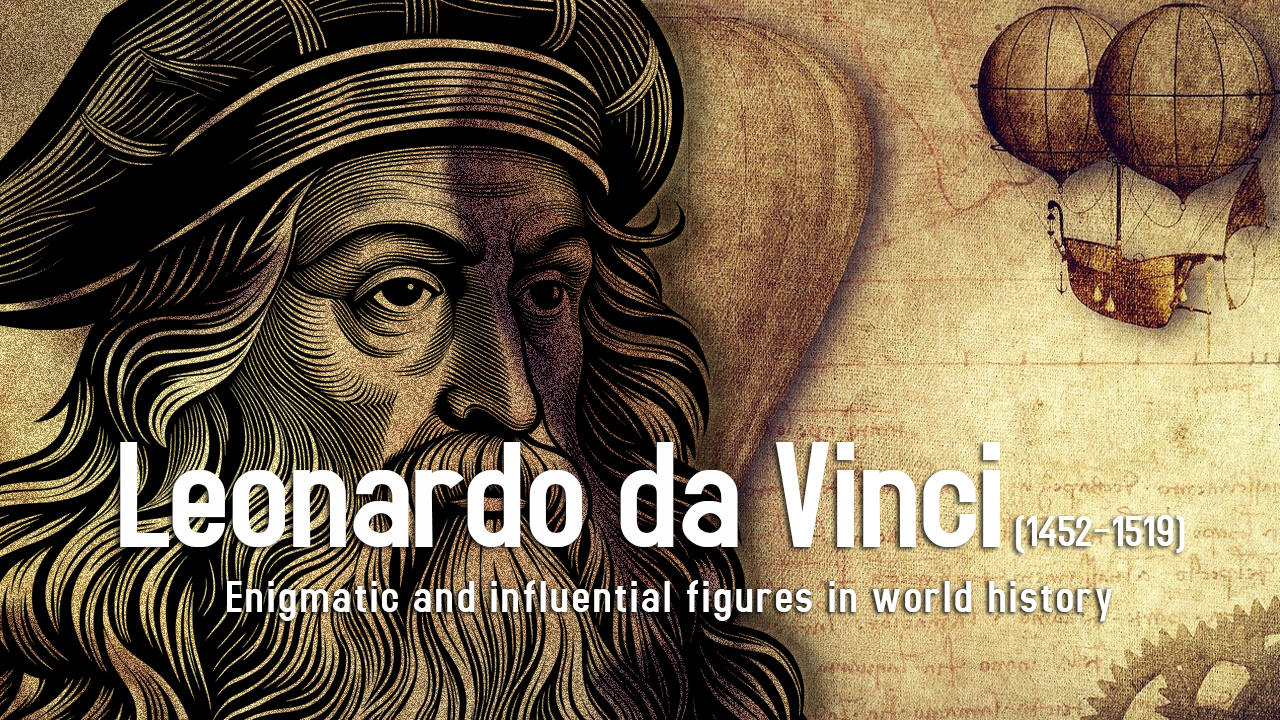
Enigmatic and influential figures in world history
Leonardo da Vinci (1452–1519) stands as one of the most enigmatic and influential figures in world history, celebrated not only for his artistic genius but also for his pioneering contributions to science, engineering, and anatomy. Born in Vinci, a town in Tuscany, to a family of artists, Leonardo was immersed in the traditions of Renaissance humanism from an early age. His father, a notary and painter, nurtured his curiosity, though Leonardo’s own pursuits often straddled the line between art and science, creating a unique legacy that transcends disciplinary boundaries. Unlike many of his contemporaries, who focused solely on aesthetics, Leonardo sought to unify the principles of nature, anatomy, and mechanics through meticulous study and experimentation.
Leonardo’s polymathic nature is epitomized by his vast intellectual pursuits. He is credited with inventing numerous devices that laid the groundwork for modern engineering, including the flying machine, hydraulic machines, and anatomical instruments. His notebooks, filled with sketches and calculations, reveal a mind obsessed with understanding the mechanics of the human body, the flight of birds, and the flow of water. His anatomical studies, such as the Vitruvian Man and detailed dissections, demonstrated a profound curiosity about human physiology, blending artistic skill with scientific rigor. Similarly, his engineering feats—like the design of a mechanical arm and a self-propelled armored tank—highlight his visionary approach to problem-solving. These innovations, though many were unrealized during his lifetime, underscore his role as a precursor to modern scientific methods.
Leonardo’s artistic legacy is equally monumental. His paintings, such as The Last Supper and Mona Lisa, are celebrated for their technical mastery and emotional depth. His technique of sfumato, which created soft transitions between light and shadow, and his use of linear perspective revolutionized European art. Yet, his true genius lies in his ability to integrate art with science. He viewed art as a means to explore natural truths, believing that the observer’s perception of reality was shaped by the interplay of light, anatomy, and proportion. This philosophy is evident in works like The Annunciation, where anatomical accuracy and symbolic meaning coexist. His notebooks, a treasure trove of ideas, reveal a mind that saw no distinction between art and science, treating them as facets of a single, unified pursuit of knowledge.
Leonardo’s influence extended beyond his lifetime through the cultural and intellectual currents of the Renaissance. His works inspired generations of artists and thinkers, and his methodologies laid the groundwork for the scientific revolution. Today, his legacy endures not only in the places where his art is housed but also in the interdisciplinary spirit he championed. His notebooks, preserved in institutions worldwide, continue to spark debates about the nature of creativity and inquiry. Ultimately, Leonardo da Vinci remains a symbol of the Renaissance ideal—where art, science, and humanism converged to create something that still resonates across centuries. His life serves as a reminder that true innovation often lies at the intersection of disciplines, where the pursuit of knowledge is both a personal endeavor and a collective human achievement.
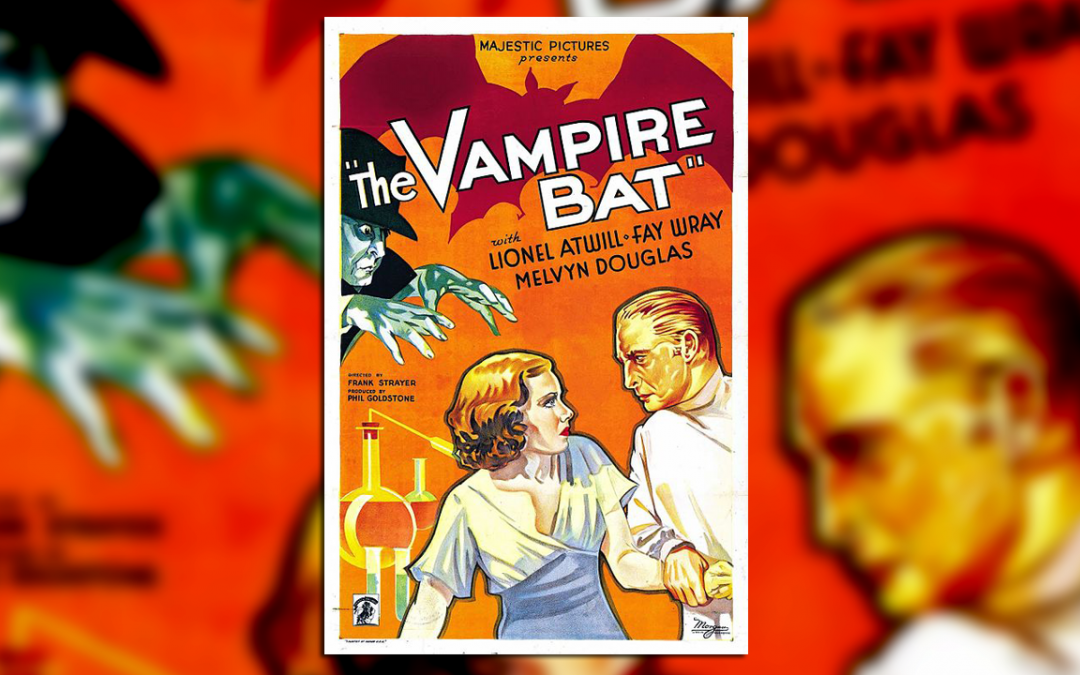
When the villagers of Kleinschloss start dying of blood loss, the town fathers suspect a resurgence of vampirism, however police inspector Karl Breettschneider remains skeptical. Scientist Dr. Otto von Niemann, who cares for the victims, visits a patient who was attacked by a bat, Martha Mueller. Martha is visited by a mentally challenged man
named Herman, who claims he likes bats because they are soft, like cats and nice. On the Doctors journey home, he meets Krinen, one of the townsfolk, who claims to have been attacked by the vampire in the form of a bat, but withheld his story from the town in order to not spread fear. Dr. von Niemann encourages Kringen to tell the townsfolk of his story. Kringen becomes suspicious that mentally-challenged Herman Glieb may be the vampire due to his obsession with bats. Herman lives with bats and collects them off the street.
Dr von Niemann returns to his home, which also houses Breettschneider’s love Ruth Bertin, hypochondriac Gussie Schnappmann, and servants Emil Borst, and Gorgiana. Fear of the vampire and suspicion of Glieb quickly spreads around the town, and people start fearing him. Ms Mueller is killed that night. The analyses of Dr. von Niemann and another doctor, Dr. Haupt, conclude that the death is the same as all of the previous deaths; blood loss, with two punctures in the neck caused by needle sharp teeth. Gleib enters the examination and upon seeing the dead body, runs away screaming.
Next morning, Glieb enters Dr. Von Niemann’s garden, where Dr. Von Niemann, Breettschneider, and Bertin are discussing vampires inside the house. The town fathers enter the house and announce that Kringen is dead and Gleib missing. An angry mob hunts down Gleib and chases him through the countryside and into a cave, where he falls to his death. That night, Dr. von Niemann is seen telepathically controlling Emil Borst, as he picks up sleeping Gorgiana and takes her down to Dr. von Niemann’s laboratory, where a strange organism is seen. They then drain her blood from her neck. Schnappmann then discovers Gorgiana’s body in her bed. Dr. Von Niemann and Breettschneider investigate and find Ms Mueller’s crucifix, which Glieb handled the night Dr. von Niemann visited her. Breettschneider is becoming more convinced of the presence of vampires in the village as no other plausible explanations for the deaths can be found. As Glieb was seen in the garden that morning, the two conclude he is guilty.
Upon hearing of Glieb’s death, however, Breettschneider’s conviction is erased. Dr. von Niemann tells Breettschneider to go home and take sleeping pills, but gives him poison instead, intent on draining his blood. Bertin discovers Dr. von Niemann telepathically controlling Borst, who is at Breettschneider’s house. It is revealed that Dr. von Niemann has created life, and is using the blood to fuel his organism. He ties Bertin up in his lab. Borst supposedly enters with Breettschneider’s body on a trolley. Dr. von Niemann walks over to Borst, who is revealed to be Breettschneider (who didn’t take the pills) in costume, with the real Borst on the trolley. Breettschneider pulls a gun on Dr. von Niemann, and walks over to untie Bertin. Dr. von Niemann then wrestles Breettschneider, who drops the gun. As the two fight, Borst picks up the gun and shoots Dr. von Niemann.
Fay Wray and Lionel Atwill had been in the successful film Doctor X (film) the previous year and had already wrapped up work on Mystery of the Wax Museum for Warner Bros. This was quite a large scale release and would have a lengthy post-production process. Seeing a chance to exploit all the advance press, poverty row studio Majestic Pictures Inc. contracted Wray and Atwill for their own “quickie” horror film, rushing The Vampire Bat into production and releasing it in January 1933.
Majestic Pictures had lower overheads than the larger studios, who were struggling at the time during the Great Depression. Part of the reason that The Vampire Bat looked almost as good as any Universal Studios Pictures horror film is because Majestic leased James Whale’s castoffs, the beautiful “German Village” backlot sets left over from Frankenstein (1931 film) (1931) and the interior sets from his film The Old Dark House (1932), plus some location shooting at Bronson Caves.
Completing the illusion that this was a film from a much bigger studio, Majestic hired actor Dwight Frye to populate scenes with Wray and Atwill. A stock musical theme by Charles Dunworth, “Stealthy Footsteps”, was used to accompany the opening credits. The Vampire Bat ruse worked well for Majestic, which was able to rush the quickie film into theaters less than a month before Warner’s release of Mystery of the Wax Museum. According to The Film Daily of January 10, 1933, the film’s running time was 63 minutes, like most extant prints.
Pretty soon I will be returning to my ligitamate income stream. You people have created untold devistation to my personal life. I ask that you no longer interfere with my business interests, if you do not personally enjoy the content I create that is not grounds to perform hate crimes against me. I do not attack people on the internet. I ask as I…Read more