
a pioneering VR experience by artist Refik Anadol
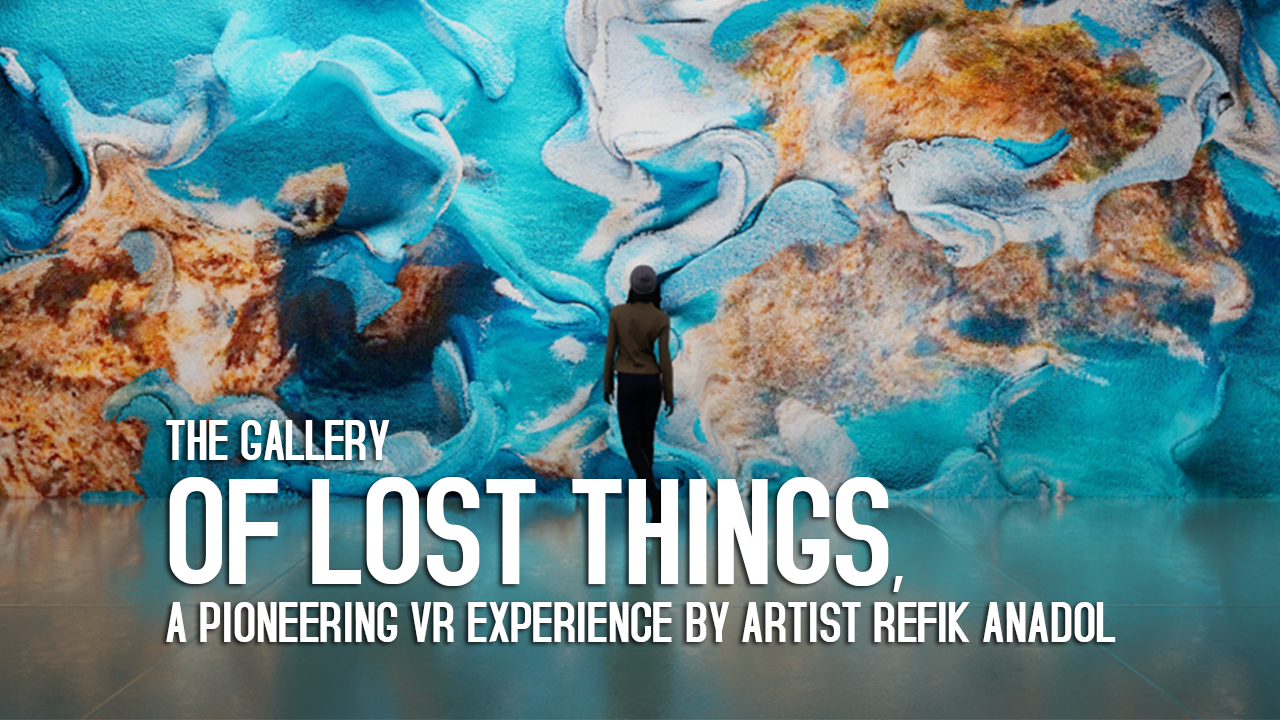
The Gallery of Lost Things, a pioneering VR experience by artist Refik Anadol, is a multisensory exploration of memory, identity, and the fragility of human experience. Installed at the University of Notre Dame’s Center for Digital Research and Innovation, this immersive installation invites viewers to navigate a digital landscape where memories are not just preserved but reconstructed through interactive, AI-driven environments. At its core, the work interrogates the concept of “lost things”—not physical objects, but intangible fragments of identity, emotion, and history. By blending art, technology, and psychology, Anadol creates a space where viewers confront the impermanence of memory and the fluidity of self.
The installation’s conceptual framework is rooted in the idea that memory is both a repository and a process. The Gallery of Lost Things employs advanced machine learning algorithms to analyze viewer data, transforming their interactions into dynamic, personalized experiences. As viewers move through the space, their choices influence the environment—a rotating sphere of data fragments that morphs in response to their emotions and movements. This interactivity challenges passive consumption of art, instead positioning the viewer as an active participant in the narrative. The experience is further enriched by sensory elements, such as the texture of virtual surfaces and the resonance of ambient sounds that shift as the viewer’s emotional state evolves, mirroring the imperfections of human memory.
Technologically, Anadol’s work exemplifies the intersection of art and AI. The Gallery of Lost Things is a culmination of his research in data visualization and interactive media, using real-time analytics to generate unique visualizations of the viewer’s experience. The “memory sphere,” a central feature, functions as both a metaphor and a mechanism: it accumulates fragments of the viewer’s interactions, creating a personalized archive of their journey. This concept resonates with contemporary discourse on digital identity, where personal histories are often fragmented and curated. By making the viewer’s own memories visible and interactive, the installation blurs the line between art and self-exploration, urging reflection on how we construct and perceive our identities in the digital age.
Thematically, the Gallery of Lost Things explores the duality of memory—its capacity to both preserve and distort. The installation’s title reflects this tension: while some memories are cherished, others are lost, erased, or misremembered. Through its immersive design, Anadol highlights the vulnerability of human cognition, where our sense of self is constantly shaped by external influences and internal reflections. The “memory sphere” becomes a symbol of this process, its shifting fragments representing the ever-changing nature of identity. Moreover, the work engages with postmodern concerns about the fragmentation of reality, questioning whether our perceptions of truth are ever absolute. By allowing viewers to navigate their own emotional landscapes, the installation becomes a mirror for individual introspection, inviting participants to confront their own vulnerabilities and uncertainties.
Beyond its artistic and technological achievements, The Gallery of Lost Things raises broader questions about the role of art in the digital era. Anadol’s work exemplifies how contemporary artists are leveraging emerging technologies to redefine the boundaries of sensory engagement and participatory experience. The installation’s success lies in its ability to merge the physical and the virtual, the personal and the collective, creating a space where art is not just observed but inhabited. It challenges traditional notions of exhibition, positioning the viewer as both observer and co-creator. In doing so, it underscores the importance of art in fostering empathy and self-awareness, particularly in an age of rapid technological change.